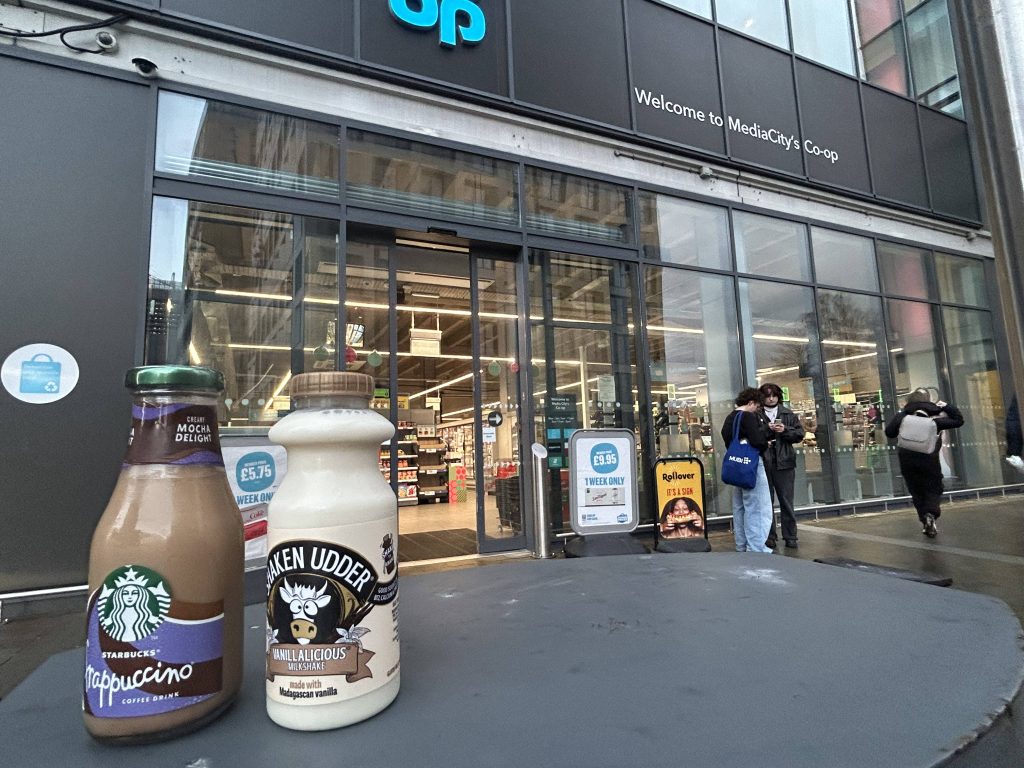
Salford shoppers say a new sugar tax on milkshakes will just add to cost-of-living pressures.
Pre-packaged milkshakes and coffees that are high in sugar are expected to cost up to 25p more from 2028, as part of Health Secretary Wes Streeting’s plans to extend the tax on fizzy drinks.
The threshold at which the tax applies will also fall from 5g to 4.5g of sugar per 100ml, in an effort to tackle obesity particularly among children.
One shopper opposed to the tax was Ellie Mann, 23, who said: “With the cost of living crisis this extra sugar tax is probably not the most important thing they could be doing right now.
“There’s nothing wrong with trying to make the nation healthier, I agree with that, but I think there’s other ways that they could be using their power and skills to help everyone day to day.”
The new tax comes in light of a new European statistic, placing the UK third amongst European countries in adult obesity.
Kathleen Johnson, 83, from Salford approves of the move which will include milk produces on sale in shops and supermarkets.
She said: “The food chain’s wrong. People are eating the wrong food. The children are just eating sweets and cakes.”
The government says the sugar tax on soft drinks, introduced in 2018, has led to a 46% reduction in sugar content. More than 90% of drinks are now under the 5g of sugar per 100ml of drink tax threshold.
Ellie added: “I think if people want a milkshake, they’re probably going to get a milkshake if there’s a few extra pennies added on, and I feel like there should maybe be more money put into educating children on healthier options.”
Milkshakes and some coffees are being targeted because some brands currenly have up to double the sugar content of a typical fizzy drink.
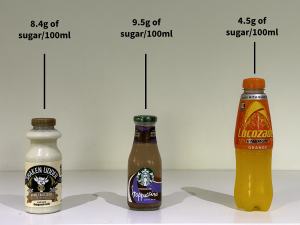
At the moment, the sugar tax is at 19.4p per litre on drinks containing at least 5g of sugar per 100ml. The tax increases to 25.9p per litre for drinks with more than 8g of sugar per 100ml.
Drinks produced in store, such as in a cafe or dessert shop, will not be affected by the changes.
The government claims the change is being made in order to tackle obesity, heart disease, stroke and cancer, estimating it could cut up to 17 million calories from the daily UK intake.


Recent Comments