
A former Salford university student who is now a politician has hailed the achievements of the Labour Party on its 124th anniversary today (February 27).
Labour’s first leader in 1900 was Keir Hardie and is now headed by another man who shares his first name, Sir Keir Starmer.
When it began, Labour overtook the Liberal Party to become the main opposition to the Conservative Party. In 2024 is hoping to make a return to power in the election expected later this year.
Jon-Connor Lyons, who was sabbatical officer at Salford Students’ Union, said: “Our party has such a rich and strong history and just like many other elected Labour politicians, I’m proud we have been an organised democratic socialist party for 124 years and counting.
“Looking back at our many achievements, such as the NHS and the introduction of the minimum wage, to securing peace in Northern Ireland and the first ever Climate Change Act, we are incredibly proud to have served workers for well over a century, and plan to continue to do so for another 124 years and beyond.”
Mr Lyons is now a Labour councillor in Manchester and chair of its planning and highways committee and is hoping the party will form the next government.
“We’ll be offering voters concrete change they can actually believe in, from building 1.5 million new houses to investing in tackling the climate crisis and bringing the jobs of tomorrow to our country -124 years on, we will continue to fight for all our communities and our country.”
Credit Flickr
One of Labour’s proudest achievements came in 1948 when Health Secretary Nye Bevan founded the NHS under the leadership of Prime Minister Clement Attlee, the free healthcare service which still exists today.
Labour returned to government in 1964 for a six-year spell under Harold Wilson. His achievements include the legalisation of abortion and homosexuality, getting rid of the death penalty and the Equal Pay Act in 1970.
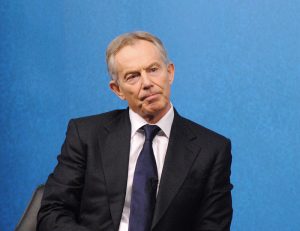
Tony Blair and Gordon Brown ran the country for 13 years under the New Labour regime. Blair had the biggest election win in the party’s history with a landslide over Conservative leader John Major. Blair introduced the national minimum wage, and was instrumental in bringing peace to Northern Ireland through the Good Friday agreement.
Credit Flickr
Blair resigned as Prime Minister in 2007 and was replaced by his Chancellor Gordon Brown. Brown oversaw the devolution of powers in Northern Ireland, the withdrawal of troops from Iraq, and the world’s first ever Climate Change Act. He stepped down as Prime Minister and Party leader in 2010, when the Lib Dems formed a coalition with the Conservatives.
Ed Miliband, Jeremy Corbyn and now Starmer have all attempted to return Labour to government, with 2024 looking like the most likely time for the party to win a general election.


The Labour Representation Committee was founded 124 years ago, some six years before the Labour Party – the original minutes of the Party’s first meeting in 1906 can be viewed at the People’s History Museum in Manchester.
The term ‘democratic socialist’ is a tautological misnomer.
Philip Snowden, Labour MP: ‘The British Labour Party is certainly not Socialist in the sense in which Socialism is understood upon the Continent. It is not based upon the recognition of the class struggle; it does not accept the teaching of Marx…’ (Manchester Guardian Reconstruction Supplement. 26 October 1922) Arthur Greenwood, Labour’s Lord Privy Seal: ‘I look around my colleagues and I see landlords, capitalists and lawyers. We are a cross section of the national life, and this is something that has never happened before’ (Hansard, 17 August 1945). Chairman of the Parliamentary Labour Party, Mr. Houghton, M.P. was impressed by his Party’s achievements : “Never has any previous government done so much in so short a time to make modern capitalism work’ (The Times, 25 April 1967). Tony Benn, former Labour cabinet minister and member of the Party’s National Executive Committee, in a candid confession to The Independent (17 May 1989) wrote: ‘Past Labour governments have always worked within the limits set by market forces (as when the cabinet capitulated to the International Monetary Fund in 1976); have always supported nuclear weapons (as when Callaghan authorised the Chevaline without telling parliament); and have regularly confronted trade unionism (as with rigid wage policies)….We must add… a clear recognition that the Labour Party is not — and probably never was — a socialist party, and its individual members do not decide its policy, nor are its election pledges apparently meant to be taken seriously.’
Unsurprisingly, Labour’s history is one of dismal failure: it has supported all major wars, including WWI, initiated the British atomic bomb, sent troops to smash strikes, established the vicious Special Patrol Group, passed racist immigration laws, imposed ‘monetarist’ expenditure cuts leading to the closure of hospitals and other vitally needed services….